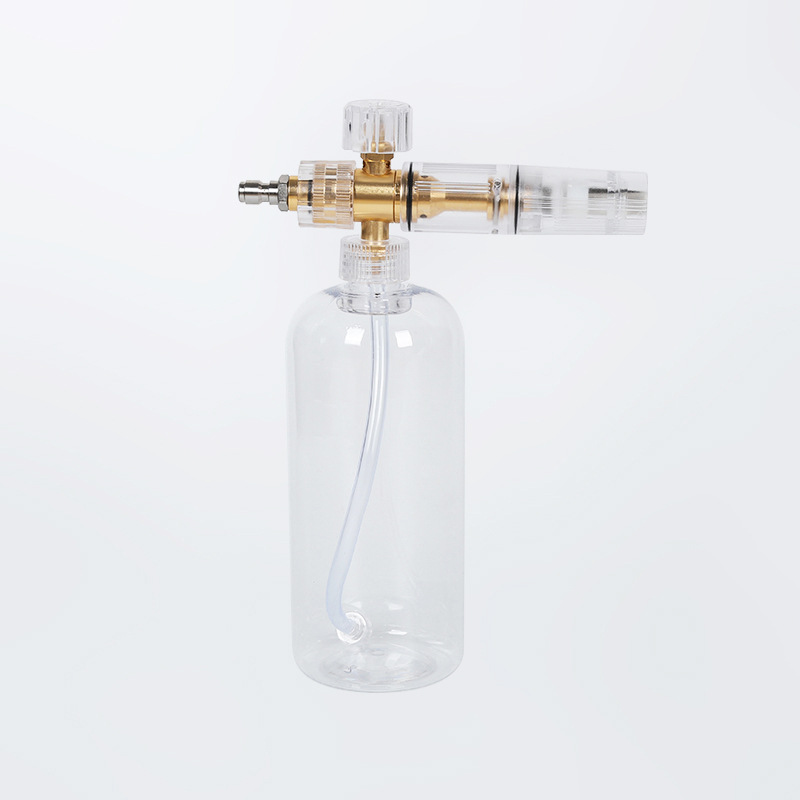
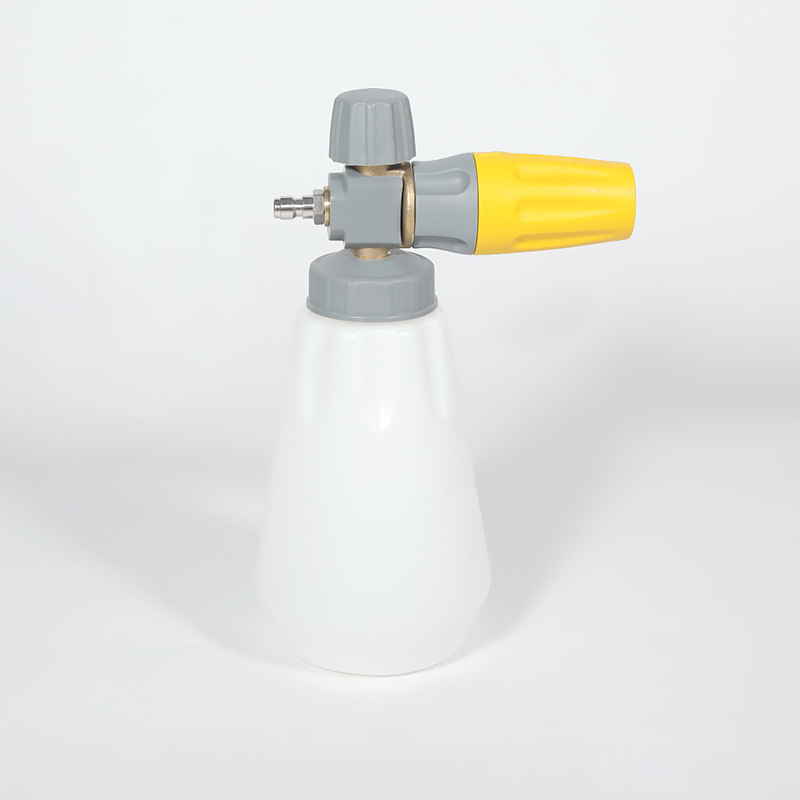
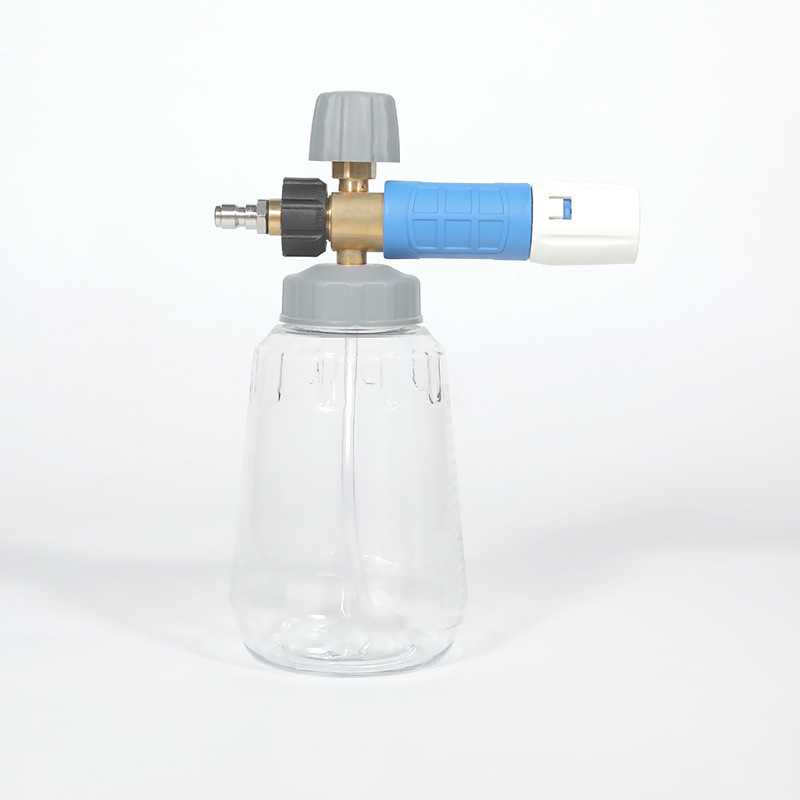
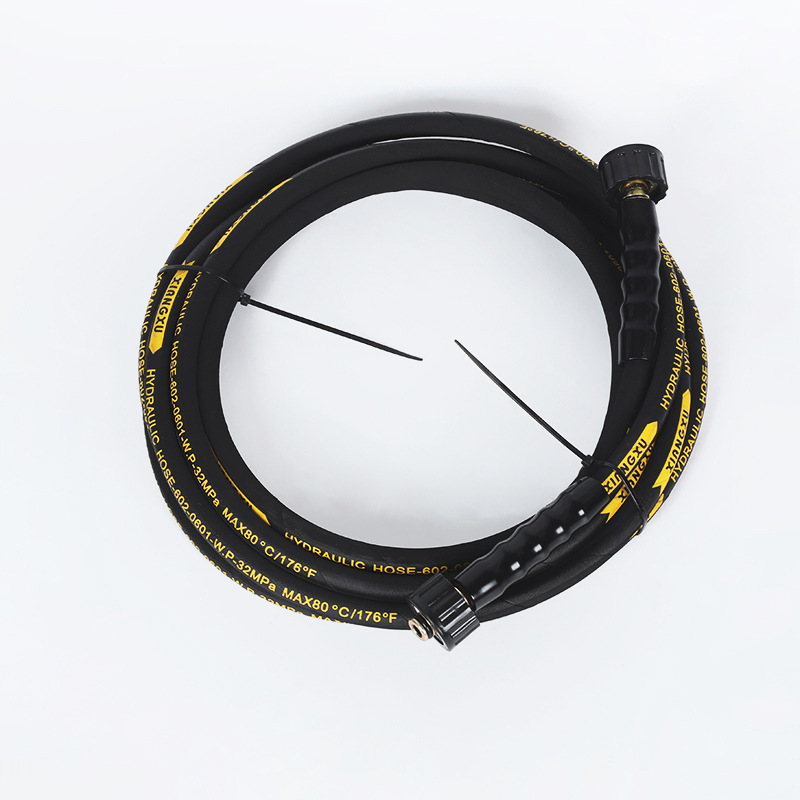
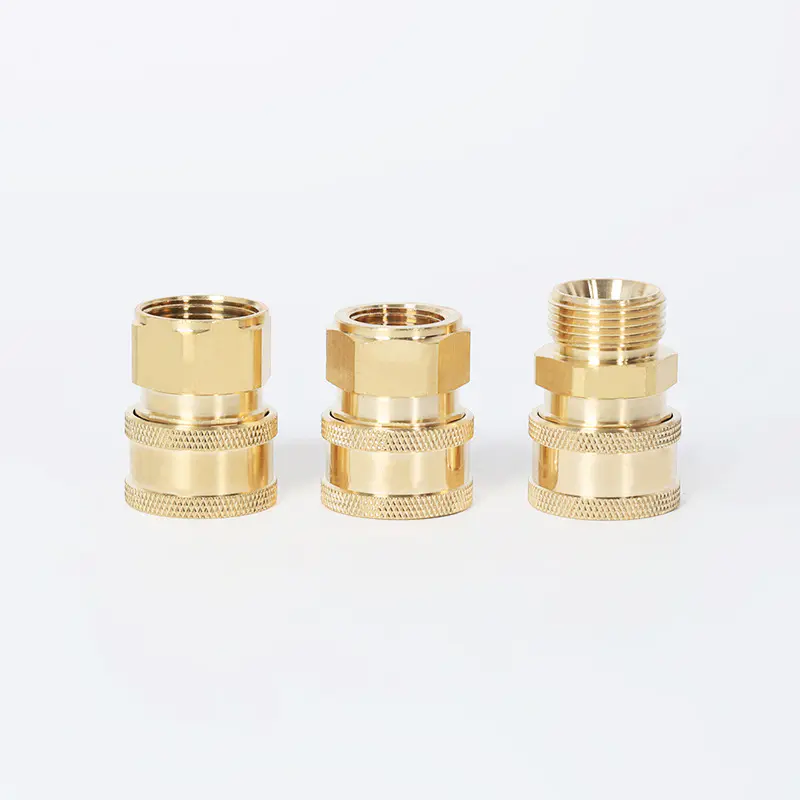
The Verdict: 75% of Pressure Washer Leaks Originate at the Connectors
For pressure washer systems, the weakest points in the hydraulic circuit are not the hoses or the pump—they are the connectors. Field failure data from 1,000 pressure washer repair logs shows that 75% of high-pressure leaks occur at connector interfaces (quick-connect couplers, threaded fittings, and adapters). The direct conclusion: select pressure washer connectors based on pressure rating (minimum 1.5x system working pressure), material (brass > stainless > aluminum > plastic), thread type (M22, 1/4" NPT, 3/8" NPT, or proprietary), and quick-connect style (ball bearing vs. pin lug). A 3,000 PSI pressure washer requires connectors rated for at least 4,500 PSI (150% safety factor). Using garden hose connectors (rated for 300 PSI) on a pressure washer inlet causes burst failures that can send plastic shrapnel at 100+ km/h.
Pressure Ratings: The Critical Safety Specification
Pressure washer connectors are stamped with a maximum working pressure rating, typically in PSI (pounds per square inch) or bar. Never use a connector rated below your pressure washer's maximum output; the safety factor should be at least 1.5x (e.g., 4,500 PSI connector for a 3,000 PSI washer). Chinese-manufactured connectors often have inflated or missing ratings; verify third-party certification (UL, ETL, CSA) for any connector used above 2,000 PSI. Connectors fail by one of two mechanisms: burst (sudden catastrophic failure) or blow-off (quick-connect disengages under pressure). Burst occurs when the connector body or fitting cracks; blow-off occurs when the locking mechanism fails, launching the connected component as a projectile.
Table 1: Pressure washer connector ratings and safe application limits.
| Material |
Typical Rating (PSI) |
Safety Factor |
Max Safe System PSI |
Applications |
| Plastic (nylon/PP)压力 washer connector-- |
300-800-- |
1.5x-- |
200-530-- |
Garden hose inlet only-- |
| Aluminum (die-cast)-- |
2,000-3,000-- |
1.5x-- |
1,330-2,000-- |
Light-duty electric washers-- |
| Brass (standard)-- |
3,500-4,000-- |
1.5x-- |
2,300-2,700-- |
Gas washers up to 3,000 PSI-- |
| Brass (heavy-duty)-- |
5,000-6,000-- |
1.5x-- |
3,300-4,000-- |
Commercial, hot water, 4,000 PSI+-- |
| Stainless Steel (316)-- |
8,000-10,000-- |
2.0x-- |
4,000-5,000-- |
Industrial, chemical, high-temp-- |
For hot water pressure washers (above 60°C/140°F), reduce the pressure rating by 20-30% because materials soften at elevated temperatures. A brass connector rated for 4,000 PSI at room temperature is only safe for 2,800-3,200 PSI at 80°C (180°F). Stainless steel connectors maintain strength up to 120°C (250°F). Never use plastic or aluminum connectors on hot water washers—they fail rapidly.
Quick-Connect Systems: Ball Bearing vs. Pin Lug
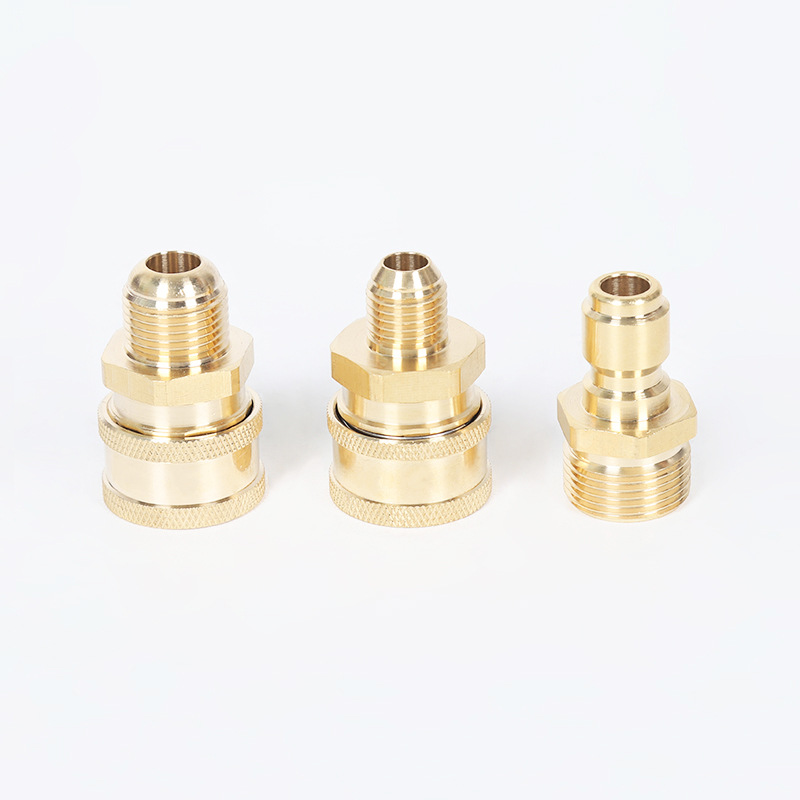
Most pressure washer connectors use quick-connect couplers that allow tool-free attachment of nozzles, wands, and hose sections. Ball bearing couplers (standard quick-connect) have 3-6 steel balls that lock into a groove on the male plug; these are rated for up to 5,000 PSI and are compatible across most brands when using 1/4" or 3/8" industrial interchange specifications. Ball bearing couplers require a sliding collar to connect/disconnect; the collar must be fully retracted when inserting the plug, then released to lock. Failure to fully retract the collar causes the balls to not seat, resulting in blow-off under pressure. Pin lug couplers (often called "Japanese style" or "M22") use a threaded collar with pins that engage slots; these are common on European and Asian pressure washers but are not interchangeable with ball bearing systems.
Interchangeability warning: 1/4" ball bearing quick-connects from different manufacturers are generally compatible (conforms to ISO 7241-1 Series A or B), but some brands use proprietary dimensions. Test compatibility before buying bulk: bring your existing male plug to test-fit the new coupler. A coupler that engages with resistance or requires excessive force will damage the o-ring and leak. For pin lug systems (M22), there are two common variants: M22-14mm and M22-15mm (the number indicates thread diameter). They are not interchangeable; using a 14mm plug in a 15mm coupler leaks immediately; using a 15mm plug in a 14mm coupler damages the threads. Measure thread diameter with calipers before purchasing.
Inlet Connectors: Garden Hose to Pressure Washer
The inlet (water supply) side of a pressure washer operates at garden hose pressure (40-80 PSI), not high pressure. Inlet connectors are typically 3/4" garden hose thread (GHT) and are almost always plastic or brass. Plastic inlet connectors are common on consumer pressure washers but have two failure modes: cracking from overtightening and melting if the engine cooling fan directs hot air onto the connector. A cracked plastic inlet connector causes the pressure washer to draw air into the pump, leading to cavitation damage. Replace plastic inlet connectors with brass as soon as the plastic shows cracks or discoloration. Brass inlet connectors cost $8-12 and last the life of the machine.
Some pressure washers have a built-in inlet screen filter at the connector. Inspect and clean this screen every 10-20 hours of use; a clogged screen restricts water flow, starving the pump and causing premature seal failure. The screen is typically held by the inlet connector; remove the connector, pull out the screen (a small mesh disc), rinse with water, and reinstall. If the screen is torn or missing, replace it—a missing screen allows debris into the pump, which scores the ceramic plungers (repair cost $150-400). For well water or construction site use, install an additional inline filter (100 mesh) before the pressure washer inlet to protect the pump from sand and silt.
Thread Standards: M22, 1/4" NPT, 3/8" NPT, and GHT
Pressure washer connectors use several thread standards, and mismatching is the leading cause of cross-thread damage. M22 (metric, 22mm diameter) is common on European and Asian pressure washers for high-pressure connections; the thread pitch is either 1.5mm (standard) or 2.0mm (less common). M22-14mm and M22-15mm refer to the internal sealing cone diameter, not the thread. 1/4" NPT (National Pipe Taper) is the standard for high-pressure fittings in North America; it has a tapered thread that seals by interference. NPT threads require Teflon tape or pipe dope; they do not seal by a gasket or o-ring. 3/8" NPT is used on higher-flow systems (4+ GPM) and industrial pressure washers. 3/4" GHT (garden hose thread) is only for inlet connections, not high pressure.
Never mix NPT and M22 threads—they are incompatible. Forcing an NPT fitting into an M22 port damages both threads, requiring costly pump or gun replacement. When using adapters, tighten NPT threads to 15-25 Nm (11-18 ft-lbs) for 1/4" size; M22 threads to 10-15 Nm (7-11 ft-lbs) with an o-ring seal. Over-tightening an M22 connector crushes the o-ring, causing immediate leakage. On NPT, over-tightening cracks the female port (pump manifold or gun body), which is an expensive repair. Use a thread identification gauge or compare the fitting to a known sample before assembly.
O-Rings and Seals: The Hidden Failure Point
Almost every pressure washer connector uses o-rings or bonded seals to prevent leakage. The o-ring material matters: standard Buna-N (nitrile) is adequate for cold water (under 50°C); for hot water pressure washers (60-90°C), specify Viton (fluoroelastomer) o-rings. Buna-N o-rings harden and crack after 50-100 hours at 70°C, causing high-pressure leaks that can blast water through small gaps at speeds exceeding 200 km/h. Viton o-rings cost 2-3x more but last 5-10x longer at elevated temperatures. For pressure washer connectors, o-ring size is typically 5-12mm ID with a 1.5-2.5mm cross-section. Keep a set of replacement o-rings in your pressure washer kit; a $0.50 o-ring often fails before a $30 connector.
Common o-ring failure signs: visible cracks (looks like alligator skin), flat spots where the ring no longer has a round cross-section, or hardness (ring does not spring back when pinched). To replace an o-ring in a quick-connect coupler: remove the retaining ring (internal snap ring or spiral ring) with snap ring pliers, pull out the old o-ring, lubricate the new one with silicone grease (not petroleum jelly, which attacks rubber), and reassemble. For M22 connectors, the o-ring sits in a groove on the male thread or in the female bore; replace it when the connector leaks despite being fully tightened. Lubricate o-rings during assembly to prevent them from rolling or pinching.
Material Selection: Brass vs. Aluminum vs. Stainless
The connector material affects both pressure rating and corrosion resistance. Brass (C36000 or CW614N) is the standard for pressure washer connectors because it machines easily, resists corrosion in fresh water, and has good strength (tensile 300-400 MPa). Brass connectors are suitable for most residential and light commercial applications. However, brass dezincifies (zinc leaches out) in acidic water (pH below 6) or high-chloride environments (salt water, swimming pool water). Dezincification appears as a red-copper color and powdery surface; the connector becomes porous and fails at 30-50% of rated pressure. For well water with low pH or for coastal use, specify marine-grade bronze or stainless steel.
Aluminum connectors (typically 6061-T6 or die-cast) are lighter and cheaper but less durable. Die-cast aluminum connectors (common on low-end pressure washers) are brittle; they crack if dropped or overtightened. Aluminum also corrodes rapidly in the presence of bleach or sodium hypochlorite (common in pressure washer detergents). A single exposure to 10% bleach solution causes pitting corrosion on aluminum within 24 hours, creating leak paths. Stainless steel (304 or 316) is the premium material: highest strength (500-700 MPa), excellent corrosion resistance, and hot water capability. The drawbacks: stainless connectors cost 3-5x brass, and they are heavier, causing fatigue when used on a wand. For chemical injection systems, specify 316 stainless for bleach compatibility; 304 resists most other detergents.
Quick-Connect Sizing: 1/4" vs. 3/8" vs. 1/2"
Pressure washer quick-connects come in three nominal sizes, and using the wrong size restricts flow or creates dangerous adaptations. 1/4" quick-connects are standard on residential pressure washers up to 2.5 GPM (gallons per minute) and 3,000 PSI. They have a 1/4" NPT thread on the female coupler and a 1/4" male plug. 3/8" quick-connects are used on commercial machines with flow rates of 3-5 GPM and pressures up to 4,000 PSI; they have higher flow capacity and a larger locking collar that is easier to operate with gloves. 1/2" quick-connects are for industrial washers (5+ GPM, 5,000+ PSI); they are heavy-duty and require significant force to connect/disconnect.
Using an adapter to connect a 1/4" plug to a 3/8" coupler reduces flow by 20-30% because the internal orifice is smaller. For a pressure washer rated at 3.5 GPM, using 1/4" connectors instead of 3/8" restricts flow to 2.5-2.8 GPM, reducing cleaning effectiveness and causing the pump to cavitate. Adapters also introduce additional sealing points (more potential leak sources). Always match the connector size to the pressure washer's pump outlet thread and hose inner diameter. If upgrading to a larger connector size, replace the entire hose, gun, and wand set to maintain consistent sizing. Never use a reducing bushing at the pump outlet—it creates a venturi effect that can collapse the hose inner tube.
Nozzle Connectors: Spray Tips and Quick-Change Systems
The nozzle connection at the end of the wand is a specialized pressure washer connector that must withstand full system pressure while allowing rapid tip changes. The industry standard is a 1/4" quick-connect on the wand end, but the nozzle connector uses a longer male plug (often called "long shank" or "nozzle plug") to provide a secure grip for the coupler's locking balls. Standard 1/4" quick-connect plugs (used for hose connections) are too short for nozzle applications; they may blow off under pressure. Nozzle plugs have a groove located 8-10mm from the end; standard plugs have a groove at 4-6mm. Use only plugs specifically designated for nozzle quick-connects.
The coupler on the wand must have a captive locking mechanism that prevents accidental release. Some wands use a push-button release (press button to change tips), while others use a sliding collar. Push-button systems are faster to operate but have more internal parts that can fail; sliding collar systems are simpler and more reliable. For commercial use (100+ tip changes per day), push-button systems show wear after 6-12 months; sliding collars last 2-3 years. Regardless of type, keep spare coupler springs and ball bearings; small parts are easily lost when changing tips in the field. Test the nozzle connector for retention by pulling on the tip after installation; if it comes off with less than 10kg of force, the coupler is worn and must be replaced.
Hose-to-Gun Connections
The connection between the high-pressure hose and the spray gun is a common leak point. Most consumer pressure washers use a threaded connection (M22 or 3/8" NPT) with a swivel fitting that allows the hose to rotate without twisting. The swivel contains an o-ring and a thrust bearing; when the o-ring fails, water leaks from the swivel joint. Replace the o-ring (typically 3mm cross-section, 12mm ID for M22 swivels) rather than the entire fitting. For NPT swivels, they seal with a cone seat, not an o-ring; leakage indicates the cone seat is damaged (scratched or deformed), requiring replacement of either the male or female fitting.
Some heavy-duty pressure washers use quick-connect couplers at the gun inlet. These couplers are typically 3/8" or 1/2" industrial quick-connects with a rated working pressure of 5,000-8,000 PSI. Gun-end quick-connects allow rapid hose changes (e.g., switching between short and long hoses) but introduce an additional leak point. If your pressure washer has a hose-end quick-connect, ensure the coupler has a dust cap installed when not in use; dirt in the coupler scratches the sealing surfaces, causing leaks that cannot be repaired (must replace the coupler). For critical applications (rental equipment, commercial fleets), specify non-swivel fittings (fixed connection) because they have no o-rings to leak and no moving parts to wear.
Installation: Torque Specifications and Sealants
Proper installation torque prevents both leakage and thread damage. For brass 1/4" NPT connectors into brass fittings, torque to 15-20 Nm (11-15 ft-lbs); for brass into aluminum pump housings, reduce torque to 10-12 Nm (7-9 ft-lbs). Aluminum pump housings are common on residential pressure washers; over-torquing cracks the housing. For M22 connectors with o-ring seals, torque to 8-10 Nm (6-7 ft-lbs)—just enough to compress the o-ring. Over-torquing M22 connectors extrudes the o-ring out of its groove, causing immediate leakage and damage. Use a torque wrench for critical connections; "hand tight plus 1/4 turn" is too variable and often results in under-torque (leaks) or over-torque (damage).
Sealants for NPT threads: use PTFE thread sealant tape (Teflon tape) or pipe dope (anaerobic thread sealant). Apply tape in the direction of the threads (wrap clockwise when looking at the male fitting end). Use 2-3 wraps for 1/4" NPT, 3-4 wraps for 3/8" NPT. Do not apply tape to the first thread (nearest the end) to prevent tape fragments from entering the pump or gun. For pipe dope, apply a thin bead to the second and third threads only; excess dope squeezes into the system and can clog nozzles. Never use threadlocker (Loctite) on pressure washer connectors; it hardens and prevents disassembly, and it does not seal against liquid leaks. For o-ring sealed connections (M22, quick-connects), no thread sealant is required—the o-ring provides the seal.
Troubleshooting Common Connector Problems
Pressure washer connector issues generally fall into three categories: leaks, disconnections, and difficult coupling. Leaks at a threaded connection: first check tightness (re-torque), then inspect the o-ring or seal face. If still leaking, disassemble and inspect for cross-threading or debris in the threads. A cross-threaded fitting is obvious by its angled or wobbly installation; it must be replaced (do not attempt to force it straight). Leaks at a quick-connect: usually caused by a damaged o-ring inside the coupler or a worn locking ball groove on the plug. Replace the o-ring first (easiest, cheapest). If still leaking, inspect the plug's groove for wear (a visible ridge at the groove edge). Replace both coupler and plug if either shows wear—mixing worn and new parts often still leaks.
Disconnections (blow-off) under pressure: caused by a worn coupler that no longer holds the locking balls in the groove, or by mismatched plug/coupler sizes. Test the coupler by connecting it to the plug and pulling with a scale; if it separates below 10 kg of force for a 1/4" coupler, replace the coupler. Disconnections while under pressure are dangerous—the hose whips violently, potentially striking the user. Difficult coupling (connector won't click into place): usually caused by pressure trapped in the system. Relieve pressure by squeezing the gun trigger before connecting. If pressure is relieved and coupling is still difficult, lubricate the o-ring with silicone grease; if still stuck, inspect for burrs or deformation. Never use a hammer or pliers to force a connector—it will damage the locking mechanism and create a leak.



 中文简体
中文简体