


 中文简体
中文简体

Large Mouth Pressure Washer Foam Generator
Cat:Pressure Washer Foam Pot
The Large Mouth Pressure Washer Foam Generator has a simple design and is easy to operate. When used in conjunction with a high-pressure water gun, it...
See Details2026-06-04
A high-performance pressure washer connector is a precision-engineered hydraulic component designed to safely secure fluid pathways, maintain absolute pressure containment, and prevent dynamic flow restriction under operating loads ranging from 100 to over 500 bar. Unlike standard low-pressure garden hose fittings that rely on loose tolerances and soft rubber washers, these heavy-duty coupling mechanisms utilize strict dimensional geometry, advanced metallurgy, and elastomeric O-ring configurations. By serving as the structural bridge between pumps, high-pressure hoses, spray guns, and foam cannons, these specialized components preserve hydraulic energy while mitigating safety hazards associated with high-velocity water jet separations.
Industrial, commercial, and residential pressure washing applications place extraordinary stress on fluid connections. Water moving through a restricted orifice at velocities exceeding 60 meters per second creates extreme turbulent kinetic energy and continuous hydraulic shockwaves (water hammer) whenever the spray gun trigger is cycled. These rapid pressure spikes generate intense hoop stress and axial thrust forces trying to tear the fitting apart. In this harsh mechanical environment, selecting the correct connection type ensures the system operates with minimum pressure loss, avoids hazardous leaks, and prevents costly operational downtime.
Specifying or manufacturing these connection assemblies requires a thorough understanding of thread standards, physical sizing tolerances, and material compatibility. Because a single pressure washing rig can incorporate multiple fitting standards—including European metrics, British standards, and American national pipe threads—improper identification can lead to catastrophic thread cross-mating or structural wall blowouts. Balancing mechanical tensile strength, corrosion resistance, and swift connect-disconnect utility requires deep engineering optimization, making the design of these small components a fundamental discipline in high-pressure fluid mechanics.
Pressure washer couplers are categorized by their structural locking mechanisms, thread types, and operational placement within the high-pressure loop. Each design handles specific trade-offs between pressure retention, sealing security, and attachment speed.
The M22 threaded connection is the most widely adopted standard for medium-duty pressure wash configurations. This design uses an exterior metric 22mm male thread shell that mates with a large, knurled female plastic or brass collar. The actual fluid seal does not rely on the threads themselves; instead, an internal cylindrical metal pin plug inserts into a matching smooth bore inside the female housing, compressed against a localized elastomeric O-ring.
M22 configurations are strictly divided into two incompatible internal sizing standards based on the pin plug diameter: 14mm and 15mm pin diameters. Consumer-grade electric pumps typically utilize the 15mm standard, whereas commercial gas-powered units use the 14mm standard. Attempting to force a 15mm pin into a 14mm housing will cause immediate physical damage to the internal O-ring, while placing a 14mm pin into a 15mm bore results in a loose fit that instantly blows out under pressure, underscoring the need for precise dimensional checking.
Quick-disconnect (QD) fittings provide rapid, tool-free component swapping using a spring-loaded outer sleeve and a ring of hardened locking balls. The female socket contains between six and twelve stainless steel bearings arranged radially inside the inner sleeve walls. When a male plug is pushed into the socket, the outer sleeve springs forward, forcing the bearings inward into a matching groove machined around the male plug's circumference.
The two primary quick-disconnect sizes used in the pressure washing industry are 3/8-inch and 1/4-inch configurations. The 3/8-inch variant is typically placed at high-volume junctions, such as connecting the pump outlet to the main hose or linking hose extensions together, where it handles high volumetric flow rates with minimal pressure drops. The smaller 1/4-inch version is standardized at the discharge end of the spray lance, allowing users to rapidly swap spray nozzles or foam applicators during operation.
For permanent internal plumbing connections—such as mounting the unloader valve directly onto the manifold block—pumps rely on fixed mechanical pipe threads. These permanent connections are divided into National Pipe Tapered (NPT) and British Standard Pipe Parallel (BSPP) standards. NPT fittings form a mechanical seal by flattening the thread roots and crests together as they are tightened, creating a metal-to-metal wedge that requires supplementary PTFE sealing tape or anaerobic liquid compounds.
Conversely, BSPP threads run completely parallel to each other and do not deform during assembly. Instead, they rely on a bonded elastomeric seal or a copper crushing washer compressed between the fitting shoulder and the face of the port. Mixing NPT and BSPP components will cause immediate thread galling or total joint failure due to their differing thread pitches and profile angles (60 degrees for NPT versus 55 degrees for BSPP).
The lifespan, safety factor, and structural integrity of a pressure washer connector depend heavily on its material chemistry. Selecting the appropriate alloy ensures the fitting can withstand continuous mechanical wear and corrosive chemical exposure.
Forged Brass (HPb59-1 or C36000 Free-Cutting Brass) represents the baseline industry standard for commercial fittings. Brass provides good machinability and high natural resistance to galvanic corrosion when exposed to hard municipal water and chemical detergents. However, brass is relatively soft, with a typical tensile strength of roughly 340 to 400 MPa. This makes brass M22 or QD components susceptible to thread deformation or sleeve wear if dropped repeatedly on hard concrete surfaces, limiting its use to systems operating below 280 bar.
For heavy industrial applications operating between 300 and 700 bar, Hardened 304 or 316 Stainless Steel is mandatory. Stainless steel alloys undergo precision heat treatment to achieve tensile strengths exceeding 500 to 650 MPa. This elevated mechanical strength prevents the locking groove on male quick-disconnect plugs from deformation (known as "brinelling" or dimpling), which occurs when hardened steel locking balls repeatedly stamp against a softer metal plug under high hydraulic shock loads.
Plated Carbon Steel is used in budget commercial configurations to cut material costs while maintaining high burst pressures. These fittings receive a thin electroplated layer of yellow or clear zinc to shield the underlying iron from oxidation. However, this protective layer quickly wears away under constant use or exposure to acidic cleaning chemicals, leading to rapid rust development that can freeze the quick-disconnect sleeve or clog delicate nozzle orifices down-stream.
While metal bodies provide the structural strength to handle high working pressures, the actual liquid containment relies on small elastomeric O-rings hidden inside the connector housings. Under pressure, water forces the flexible O-ring into the sealing gap, blocking any fluid path and creating a leak-free seal.
The hardness of the elastomer, measured on the Shore A Durometer scale, is a critical specification for high-pressure durability. Standard plumbing fixtures use soft rubber rings rated at 50 to 60 Durometer. Under high pressure, these soft materials deform and extrude into the clearance gaps between the metal parts, leading to rapid tearing and seal failure. High-pressure wash connectors require a minimum material hardness of 75 to 90 Shore A to resist extrusion and maintain their shape under load.
The chemical formulation of the O-ring determines its temperature and fluid compatibility:
Selecting the right connector configuration for an industrial or commercial wash system requires analyzing pressure ratings, water volume restrictions, and expected operational lifespans. The table below details the performance characteristics across standard industry fittings.
| Connector Configuration Standard | Maximum Safe Working Pressure | Internal Flow Orifice Diameter | Connect/Disconnect Speed Cycle Metric | Primary System Failure Mode |
|---|---|---|---|---|
| 3/8-inch Quick-Disconnect (Stainless Steel) | 345 - 690 bar | 9.6mm (High flow, low restriction) | < 2 Seconds (Instant snap) | Internal socket O-ring abrasion wear |
| 3/8-inch Quick-Disconnect (Forged Brass) | 275 - 310 bar | 9.6mm | < 2 Seconds | Plug groove brinelling & socket distortion |
| M22 Threaded (14mm Pin Core / Brass) | 200 - 275 bar | 7.0mm (Moderate restriction) | 30 - 45 Seconds (Manual spin) | Thread galling or pin-face bending |
| 1/4-inch Quick-Disconnect (Brass/Steel) | 275 - 345 bar | 5.2mm (Restricted to lance tips) | < 2 Seconds | Spring failure due to grit contamination |
The technical comparison highlights that hardened stainless steel 3/8-inch quick-disconnect fittings offer superior pressure handling and faster swap speeds compared to threaded alternatives. Additionally, their larger 9.6mm internal bore minimizes friction losses inside the fitting, helping the system maintain maximum pressure at the spray nozzle tip for optimum cleaning performance.
When designing high-volume washing systems processing 15 to 30 liters of water per minute, the internal diameter (ID) of the connectors becomes a key factor in fluid efficiency. Every contraction in the flow path forces the fluid to accelerate, converting useful pressure into heat and creating a localized pressure drop across the fitting connection.
This energy loss is defined by Darcy-Weisbach hydraulics, where the pressure drop ($\Delta P$) increases exponentially with fluid velocity. Using an undersized connector—such as an economy M22 fitting with a restricted internal bore—can cause a pressure drop of up to 15 to 25 bar per junction. Across a standard system with four separate connection points, this restriction can waste up to 100 bar of cleaning pressure before the water ever reaches the spray lance.
To prevent these energy losses, commercial systems use full-flow connectors where the fitting's internal bore matches the ID of the high-pressure hose. Ensuring a consistent internal path maintains a steady fluid velocity, preventing cavitation zones behind the connection that can chew away internal metal walls and damage down-stream spray nozzle orifices.
High-pressure connectors operate in dirty outdoor environments where sand, grit, and hard water scale can compromise seals. Implementing a structured maintenance routine prevents sudden connection failures and extends the operational life of the fittings.
Never attempt to service, disconnect, or adjust a pressure wash fitting while the system is pressurized. Turn off the primary water supply and power source, then pull the spray gun trigger until all stored pressure is completely discharged. Once safe, pull back the quick-disconnect sleeve and inspect the male plug for visible scoring, cracking, or brinelling dimples that can cause the connection to jam under load.
If water is weeping from a quick-disconnect collar or threaded connection, the internal O-ring must be replaced. Use a non-marring brass or plastic pick to lift the damaged O-ring out of its internal groove, taking care not to scratch the surrounding polished metal walls. Spray the cavity with an electronic contact cleaner or a mild solvent to flush out any trapped sand, grit, or mineral deposits that could prevent the new seal from seating correctly.
The installation of replacement seals requires careful technique to prevent damaging the new elastomer:
For fixed pipe threads like NPT, clean away old thread tape using a stiff wire brush, then wrap three to four turns of heavy-duty pink PTFE tape in a clockwise direction around the male threads. Thread the components together by hand before tightening securely with a torque wrench to the manufacturer's recommended spec. Finally, reconnect the water supply, run the pump at low idle, and check the joint for any signs of weeping before ramping up to full working pressure.
Producing reliable, interchange-compatible high-pressure connectors requires precise automated manufacturing. Because quick-disconnect plugs must interface seamlessly with sockets produced by various manufacturers worldwide, machining operations follow strict international dimensional standards.
Fittings are machined on multi-axis live-tooling CNC Swiss lathe turning centers from solid hex bar stock. The outer diameter of a 3/8-inch quick-disconnect male plug must be held to a tight tolerance of under ±0.02mm. Any minor deviation over this size can prevent the plug from sliding into the female socket, while an undersized plug will rattle under load, accelerating wear on the stainless steel locking balls and causing premature connection failure.
Quality control teams use automated optical comparators and high-precision thread air gauges to monitor production lines in real time. Random samples are pulled from every batch and subjected to hydrostatic burst testing inside armored steel chambers. To earn a certified 300 bar working pressure rating, the connector must withstand an ultimate destructive burst pressure of at least 1200 bar (a 4:1 safety margin) without cracking or releasing the locking mechanism, ensuring the safety of operators working with high-pressure fluid systems.
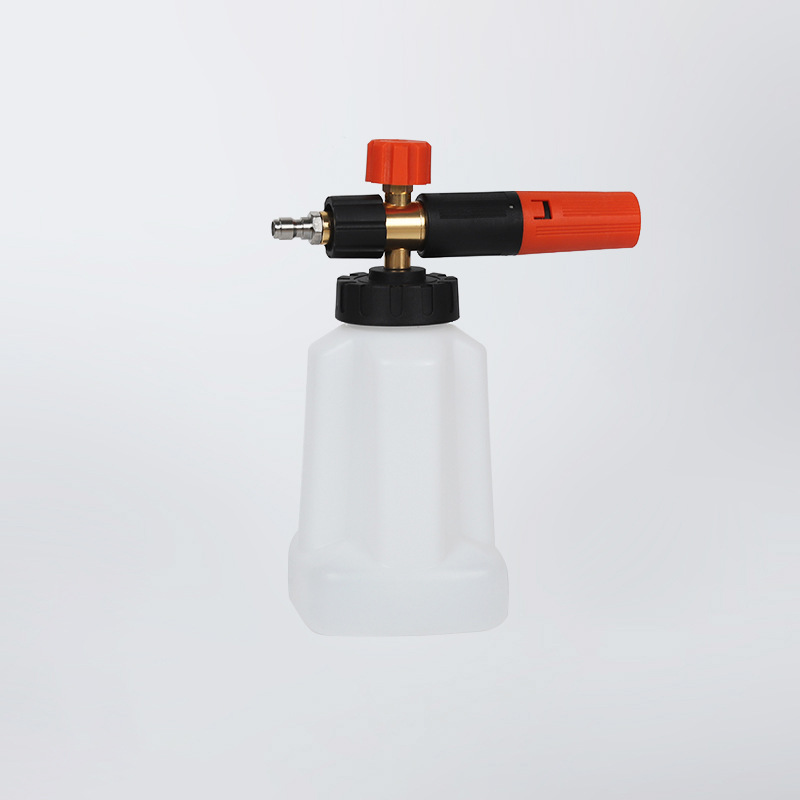
The Large Mouth Pressure Washer Foam Generator has a simple design and is easy to operate. When used in conjunction with a high-pressure water gun, it...
See Details
The large mouth design of the High-pressure PA foam large mouth pot allows users to more easily inject detergent into the tank during use, and the pro...
See Details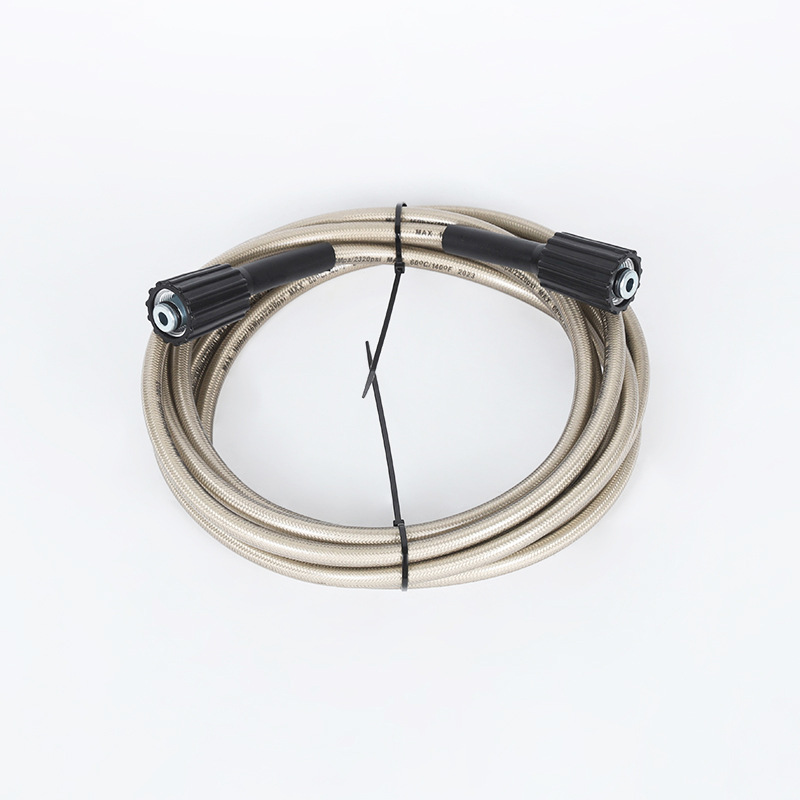
Household portable high-pressure car washing machine water pipe is equipped with connectors at both ends, which can easily connect to various cleaning...
See Details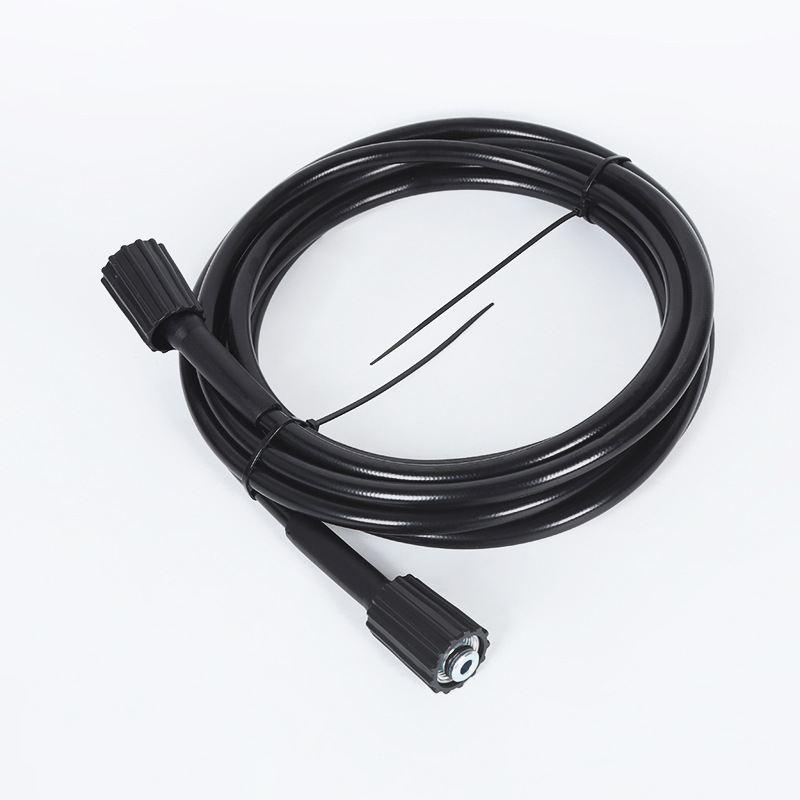
When not in use, the Cleaning machine adapter high-pressure hose can be easily rolled up for easy storage without taking up much storage space. This p...
See Details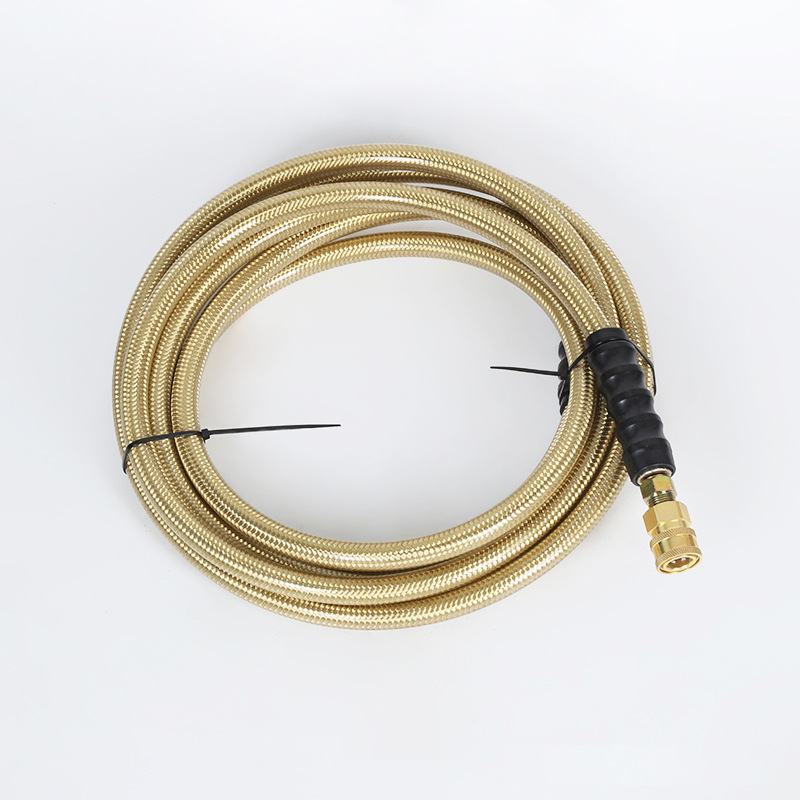
The product adopts metal braiding technology, which greatly improves the stability, pressure resistance, wear resistance, and stretch resistance of th...
See Details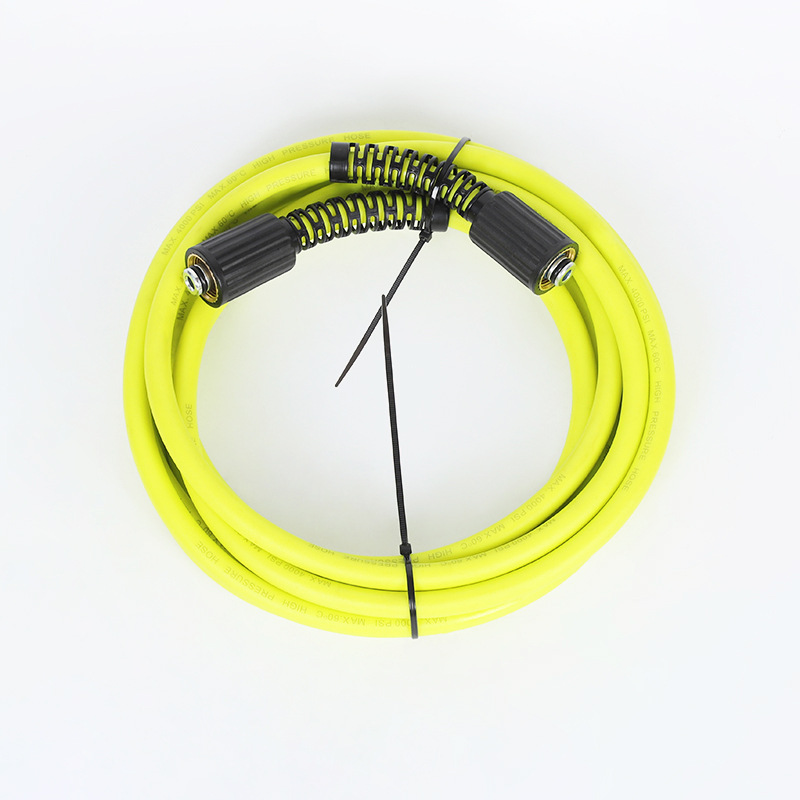
Household high-pressure cleaning machine wear-resistant braided water outlet hose is more suitable for home use. It is small in size and light in weig...
See Details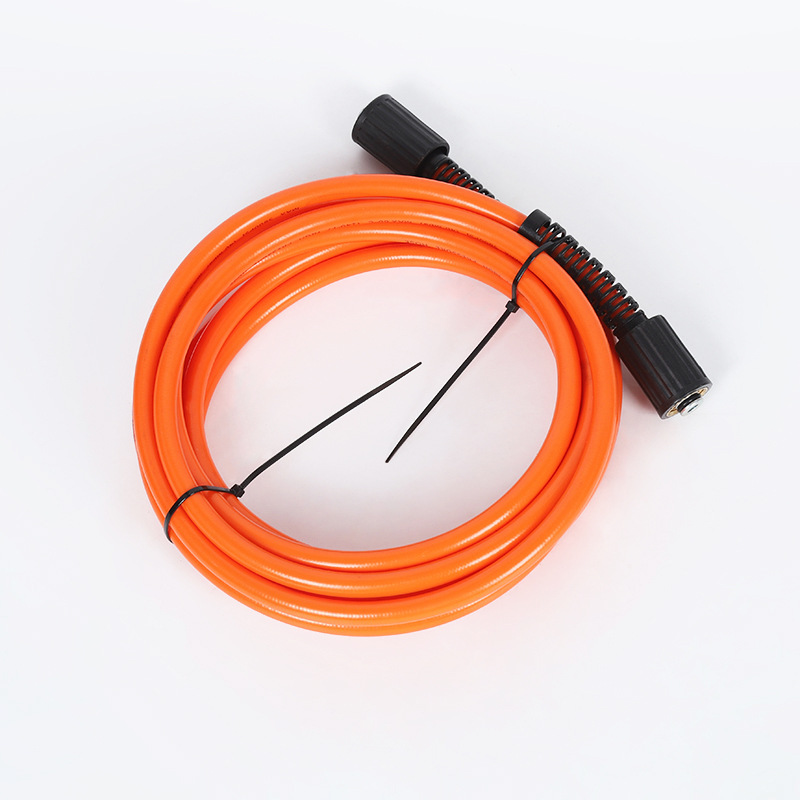
Car washing machine high-pressure wear-resistant water pipe The hose has outstanding wear resistance, which means that when washing the car, there is ...
See Details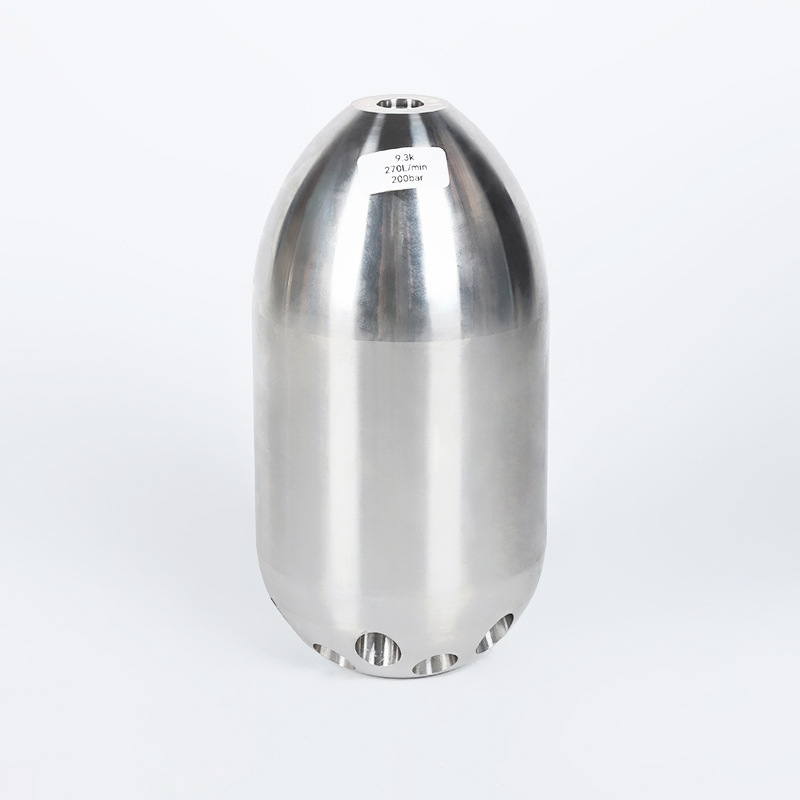
The water flow generated by the High-pressure nozzle for the sewage suction truck can quickly and powerfully flush dirt and blockages in the pipes, im...
See Details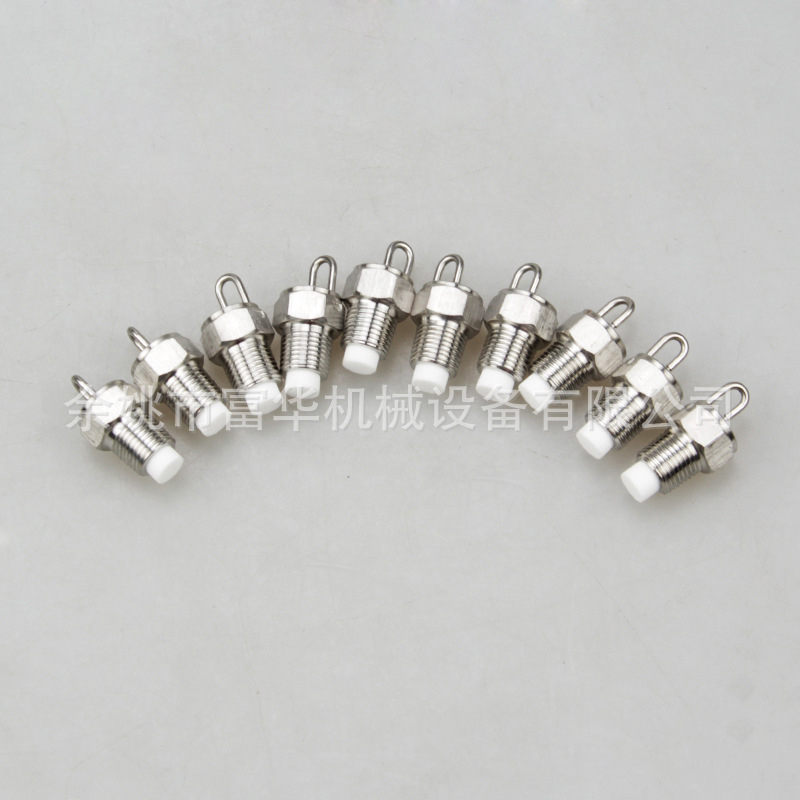
Pipe cleaning round thimble atomizing nozzle is suitable for pipes of different diameters and can clean the inner wall of the pipe in all directions. ...
See Details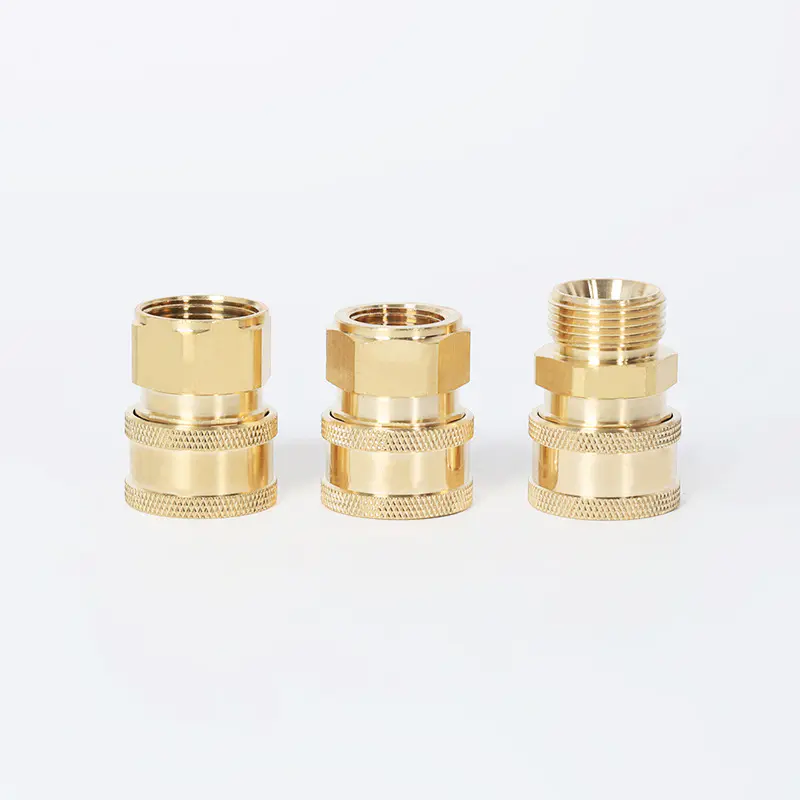
High-pressure cleaning machine quick change 1/4 union quick plug can realize the quick connection between different parts or equipment, making it conv...
See DetailsCopyright © Yuyao Fuhua Machinery Equipment Co., Ltd. Rights Reserved.
Wholesale High Pressure Cleaning Tools/Accessories Manufacturers


