A pressure washer gun that looks impressive on the box can fail within the first five minutes of real work. The trigger snaps open, the jet pulses, the fitting weeps at the connection, or the spray pattern degenerates into an uneven fan that leaves streaks on the car. Most users blame the pump. In practice, the problem is almost always a mismatch between the gun, the nozzle, the hose, and the connector.
The reliable way to select a high pressure water gun is to work backwards from the cleaning task. First decide what pressure and flow the surface needs. Then choose a nozzle that shapes the jet correctly. Confirm the thread and quick-coupler standards. Finally, assess the material quality of the body, seals, and fittings. When those four elements line up, the gun behaves like a controlled tool. When they do not, no amount of trigger work will fix it.
Rated Pressure Is Only Half the Story
Start from this conclusion: a gun rated for very high pressure but supplied by a low-flow pump cleans slowly, while a high-flow gun with modest pressure simply wets the surface. Cleaning power is the combination of pressure and flow delivered to the surface.
Pressure, expressed in PSI or bar, determines how forcefully the water strikes the dirt. Flow, expressed in liters per minute or gallons per minute, determines how much water carries that dirt away. A 150-bar gun at 15 L/min strips mud from concrete. The same 150 bar at 6 L/min barely moves road film off a car panel. Both numbers must match the pump capability, not just the label printed on the gun body.
Typical operating ranges for common cleaning tasks; always confirm against your pump’s rated output.
| Application |
Typical Pressure |
Typical Flow |
Nozzle Type |
| Car and vehicle washing |
100–150 bar |
10–15 L/min |
Fan nozzle, foam pot |
| Concrete and surface cleaning |
150–250 bar |
13–20 L/min |
Rotating nozzle, surface cleaner |
| Drain and pipe unblocking |
80–200 bar |
12–40 L/min |
Forward-jet, rotating sewer nozzle |
| Industrial descaling |
500 bar and above |
15–50 L/min |
Ultra-high-pressure lance, overflow gun |
Check the pump’s rated flow before choosing a gun. A narrow-bore lance restricts flow even when the pump can supply more. A rotating nozzle with a small orifice raises jet velocity but reduces the width of the area covered per pass. For production work, the correct compromise between velocity and coverage saves more time than a higher pressure number on the box.
Nozzle Selection Determines What the Gun Can Do
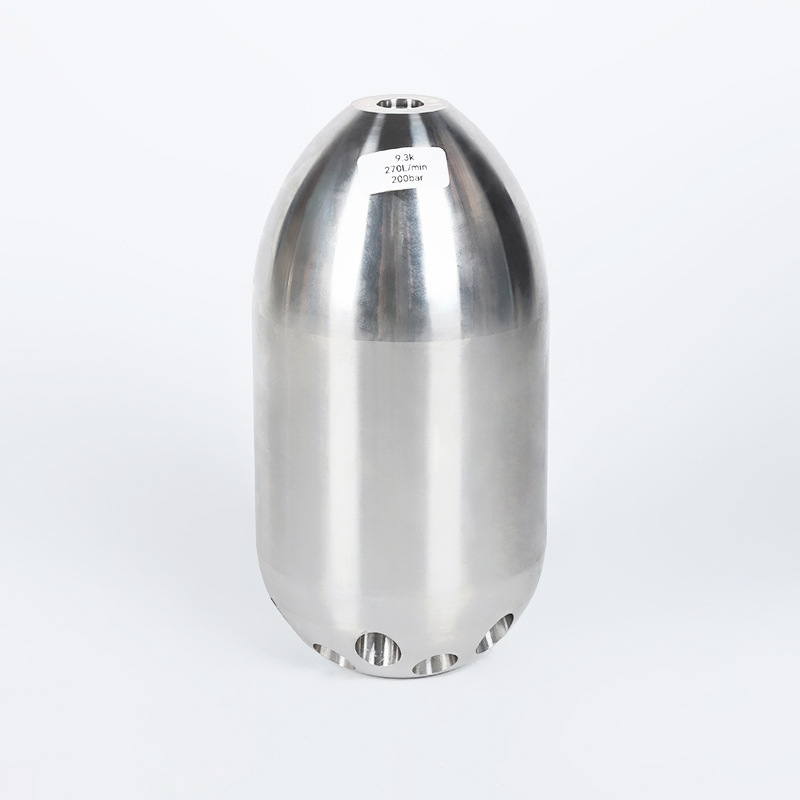
Nozzle design is the fastest way to change the behavior of a high pressure water gun. A fan nozzle spreads the jet for rinsing and washing. A straight or zero-degree jet concentrates force for stripping paint or dissolving chewing gum. A rotating nozzle spins the water stream to combine cutting force with a wider pattern. A puncture nozzle pushes into a clogged pipe and fires forward jets to break the blockage before rear jets flush it away.
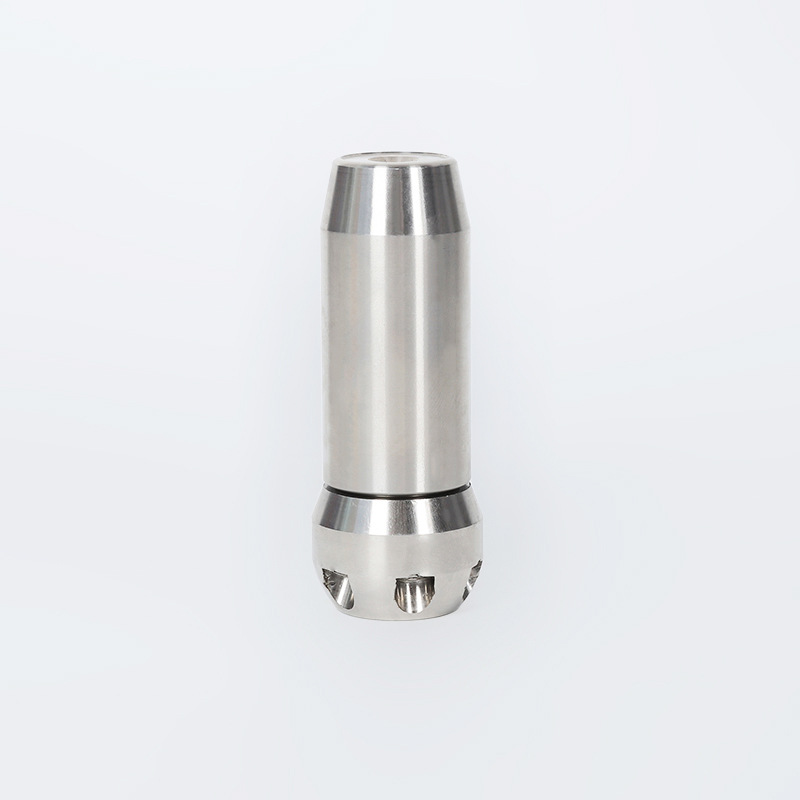
For drain and sewer work, rotation is the feature that separates a useful gun from a frustrating one. Rotating nozzles such as the high pressure cleaning and unblocking rotating nozzle use angled rear jets to spin the head while forward jets address the obstruction. The rotation keeps the jet moving across the full pipe circumference instead of carving a single channel. Fuhua’s product range also includes the ultrahigh-pressure rotation devil nozzle for stubborn blockages and the pangolin nozzle for sewer cleaning, both built for long duty cycles on dirty water.
Material matters as much as geometry. Stainless steel nozzles resist erosion from sand and debris, brass is easier to machine but wears faster in abrasive conditions, and plastic nozzles should be reserved for light rinsing duty. Match the nozzle material to the water quality and the frequency of use, not to the price of the gun alone.
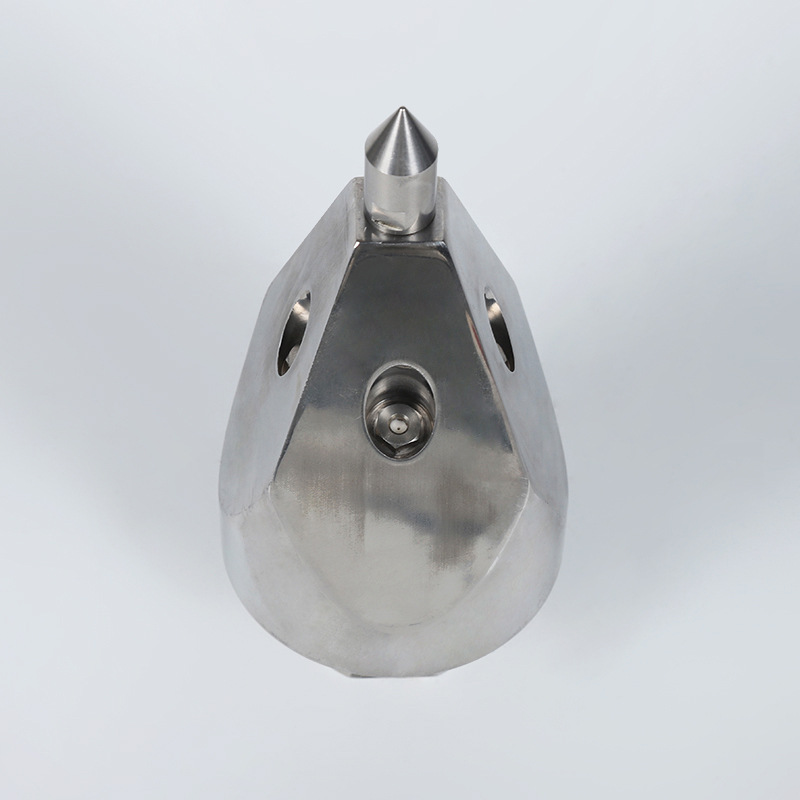 High Pressure Rotating Nozzle for Cleaning and UnblockingThis rotating nozzle suits both surface cleaning and drain unblocking. Its material and sealing design influence durability under abrasive water, so check brass or stainless options for long-term reliability.View Product →
Materials and Machining Quality Decide Service Life
The gun body, valve, and sealing faces determine how long the tool remains dependable. Brass resists corrosion and handles moderate pressure well. Stainless steel, usually grade 304 or 316, is the reference for high-pressure and ultra-high-pressure work because it tolerates repetitive stress, heat, and aggressive chemicals. Plastic bodies reduce weight and cost, but they deform under sustained load and fail first at the threaded bosses where the lance and hose attach.
Machining tolerance is where low-cost guns reveal their true quality. A well-made thread engages smoothly. A quick-connect collar clicks into place with no wobble. A trigger valve modulates gradually instead of snapping open. The manufacturer behind the gun matters here: Fuhua Machinery Equipment Co., Ltd. is a precision mechanical parts specialist with sixteen years of experience and over a thousand completed projects. When the sealing faces of a valve or connector are cut to consistent geometry, the joint holds pressure without relying on PTFE tape or excess sealant. That consistency is visible in the straightness of the threads and the flush mating of the quick coupler.
When you inspect a gun, look at the areas that were machined rather than the painted surfaces. Check the edge of the nozzle orifice for burrs, the trigger pivot for play, and the fitting face for flatness. These small details predict whether the gun will still be serviceable after two seasons of use.
Connectors and Thread Standards Are a Real Purchasing Risk
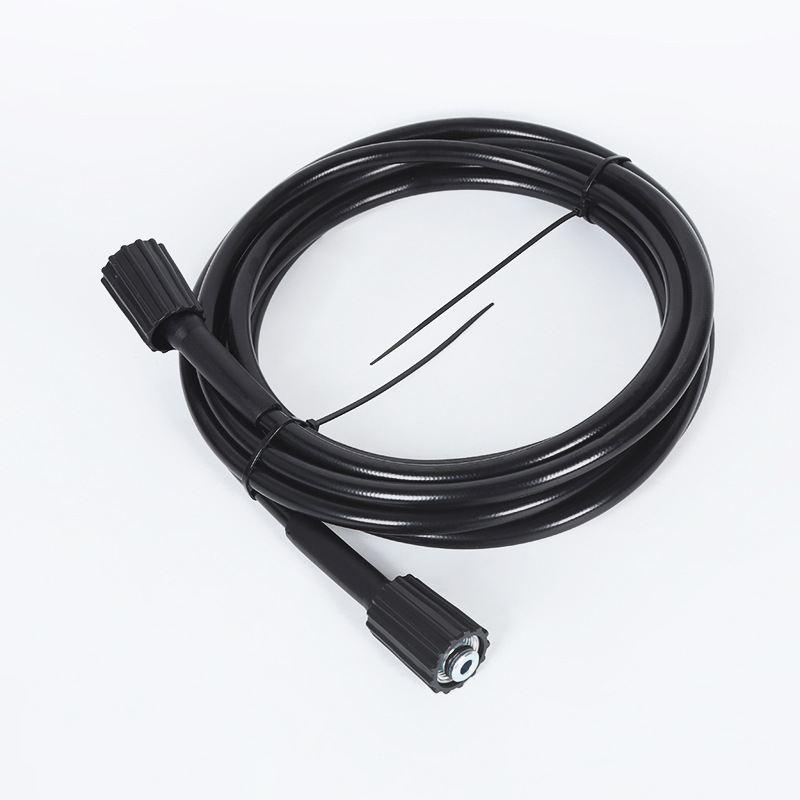
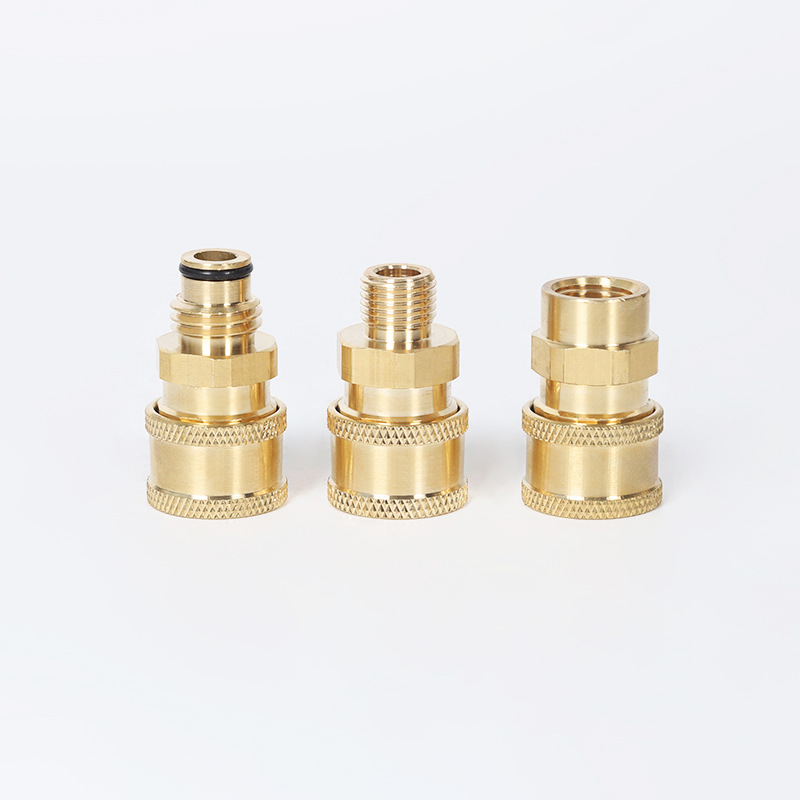
Compatibility failures are the most frequent purchasing mistake with high pressure water guns. The market uses several connection families: 1/4-inch and 3/8-inch quick plugs, M22 threaded fittings, rotary joints for high-pressure lances, and gun-specific adapters. A gun that fits one brand’s hose may not fit another’s.
Quick connectors add convenience and speed, but they also add potential leak points and a measurable pressure drop. A stainless steel quick connector with a flat sealing face and captive O-ring is the safe choice for continuous professional use. Threaded connections remain the more reliable option at very high pressures because they do not depend on collar spring tension.
The relationship between these standards and overall cleaning efficiency is covered in more detail in our guide to choosing the right pressure washer connector. The short version: decide the connector standard early, buy the gun and hose from the same system, and keep a spare coupler in the toolbox.
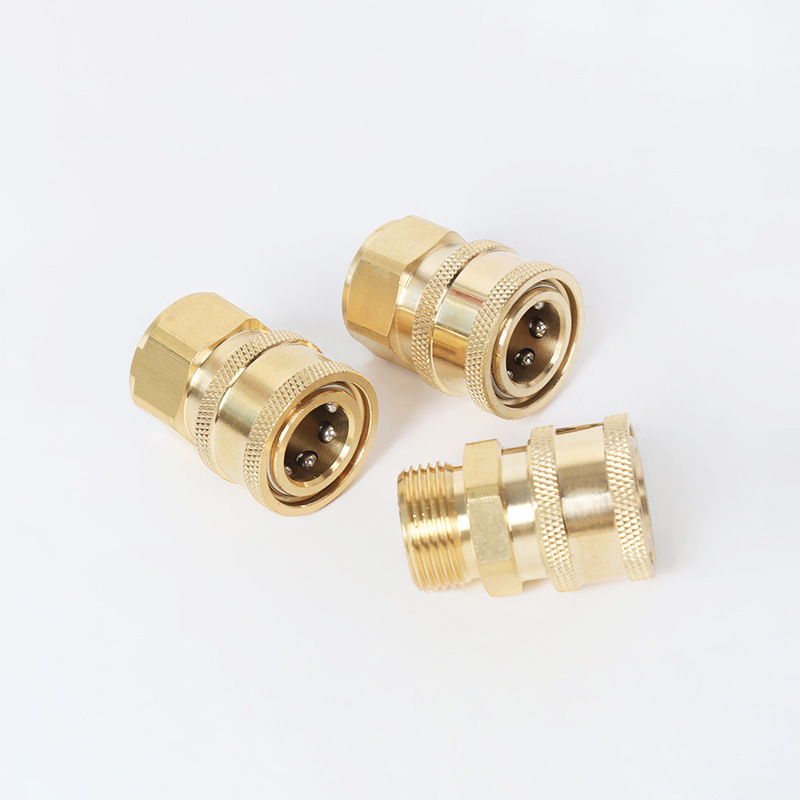 Quick Change 1/4 Union Quick Plug for Pressure WashersThis quick-connect fitting lets you swap accessories fast and keeps the gun and hose on the same standard. Ideal for building a compatible pressure washer setup without leaks.View Product →
Configure the Gun for the Task: Car Washing, Drains, and Flat Surfaces
The same gun can serve very different jobs when the accessory set is chosen correctly.
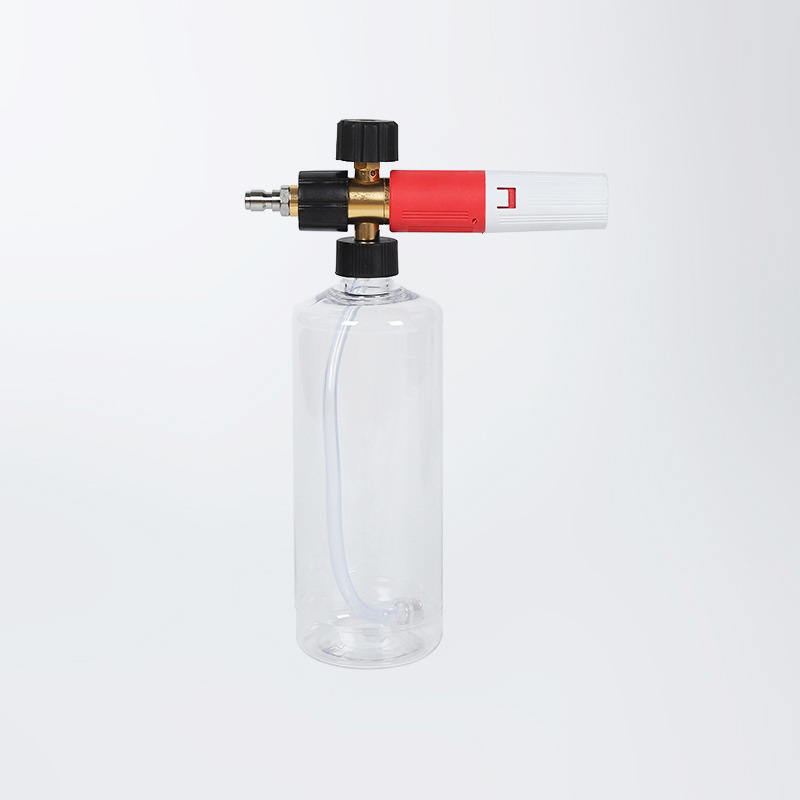
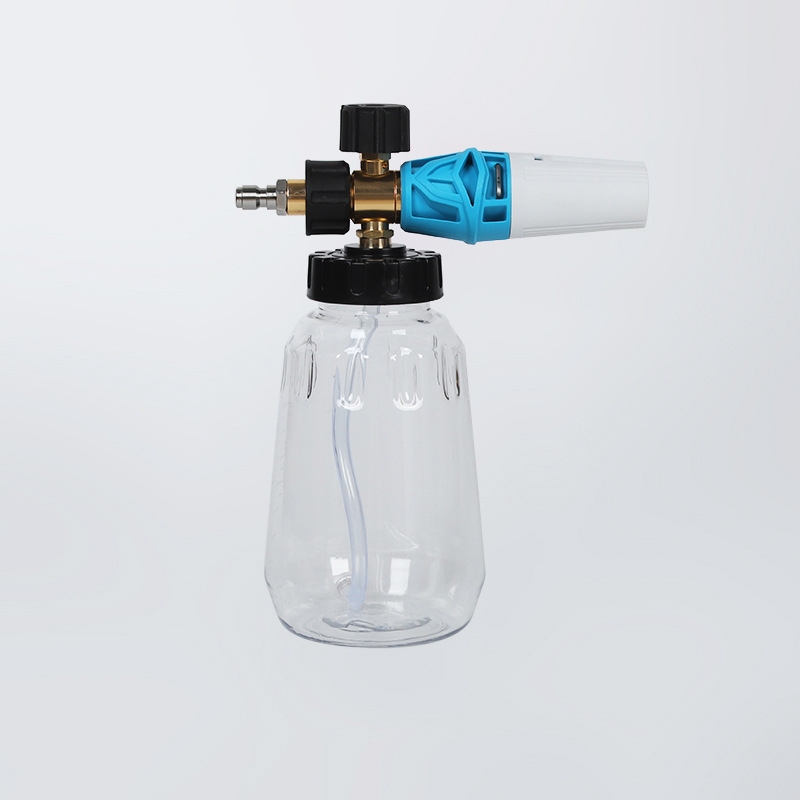
For car and vehicle washing, a foam pot turns the pressure washer into a soap applicator. Dense foam clings to the paint, lifts the dirt, and reduces the contact required during the rinse. A sector-shaped PA foam pot with a 1/4 quick plug connects directly to the gun and produces snow foam when the detergent ratio is set correctly. How to calibrate that ratio is explained in our article on how a foam pot improves the cleaning process when using a pressure washer.
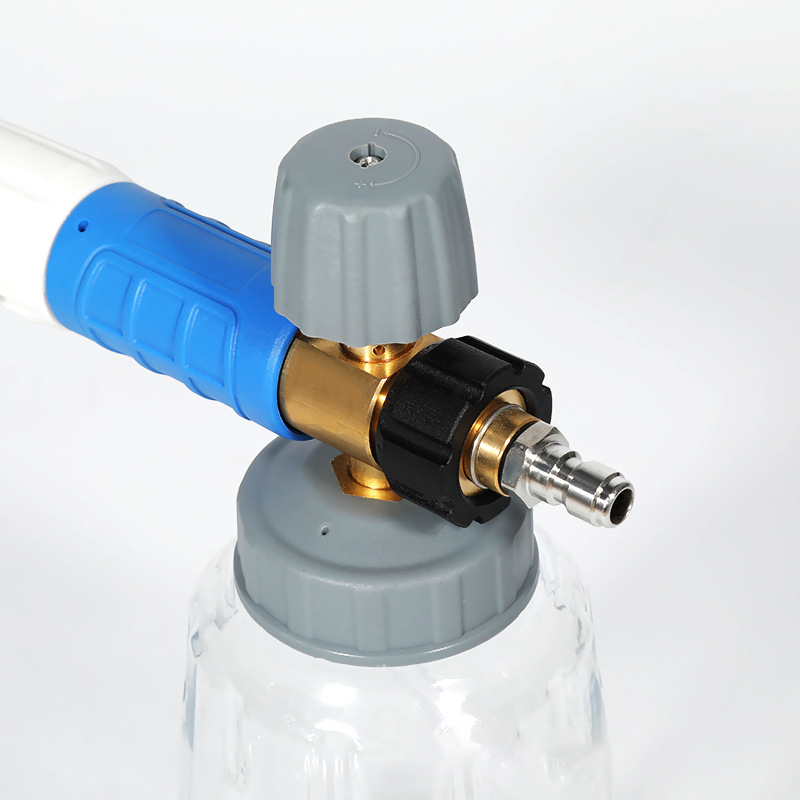 Sector-Shaped PA Foam Pot for Car WashingThis foam pot produces thick snow foam that clings to paint and lifts dirt, cutting contact during rinsing. Its sector-shaped spray covers a wide area, and the 1/4 plug connects straight to your gun.View Product →
For drain clearing, choose a hose long enough to reach the blockage and a nozzle matched to the pipe diameter. Forward-jet nozzles push toward the obstruction, while rear jets pull the nozzle forward and flush debris back toward the opening. A telescoping lance or gutter cleaner with an angled tip is the better tool for overhead gutters and roof edges, because it keeps the operator on the ground.
For large flat surfaces, use a surface cleaner attachment with wheels. A constant nozzle-to-surface distance prevents streaking, and the wider cleaning path reduces the time spent on each square meter. This is particularly valuable on driveways, warehouse floors, and construction site equipment.
Final Checklist Before You Order
Run through these points before committing to a high pressure water gun, whether for personal or commercial use:
- Confirm that the gun’s rated pressure and flow are within the pump’s output curve, not at the edge of it.
- Select the nozzle family for the task: fan for rinsing, rotating for stubborn dirt and drains, puncture for blockages, atomizing for chemical application.
- Verify the connector standard on both the gun and the hose: 1/4-inch or 3/8-inch quick plug, M22, or rotary joint.
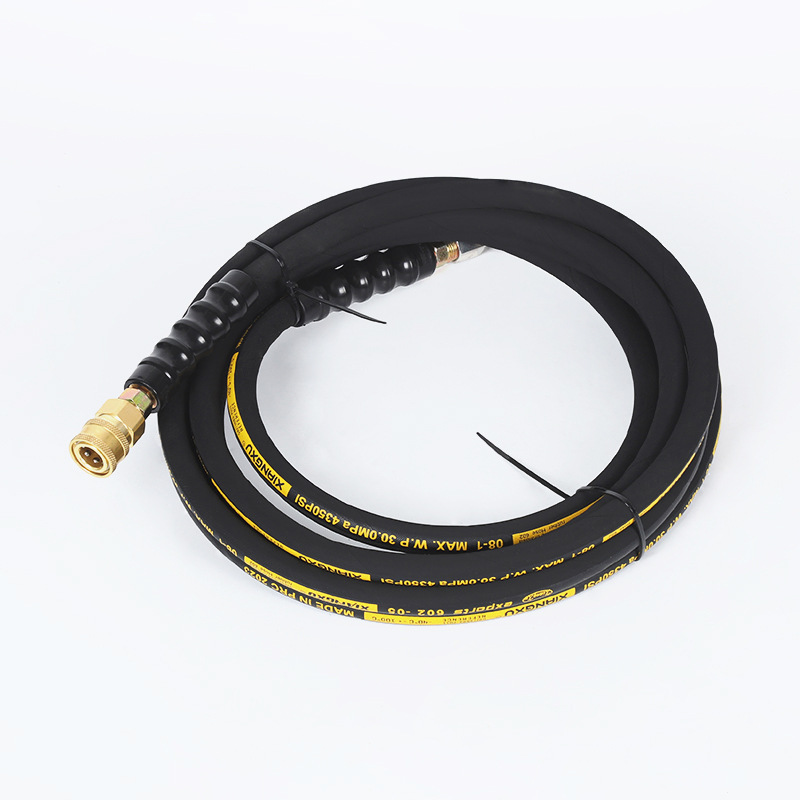
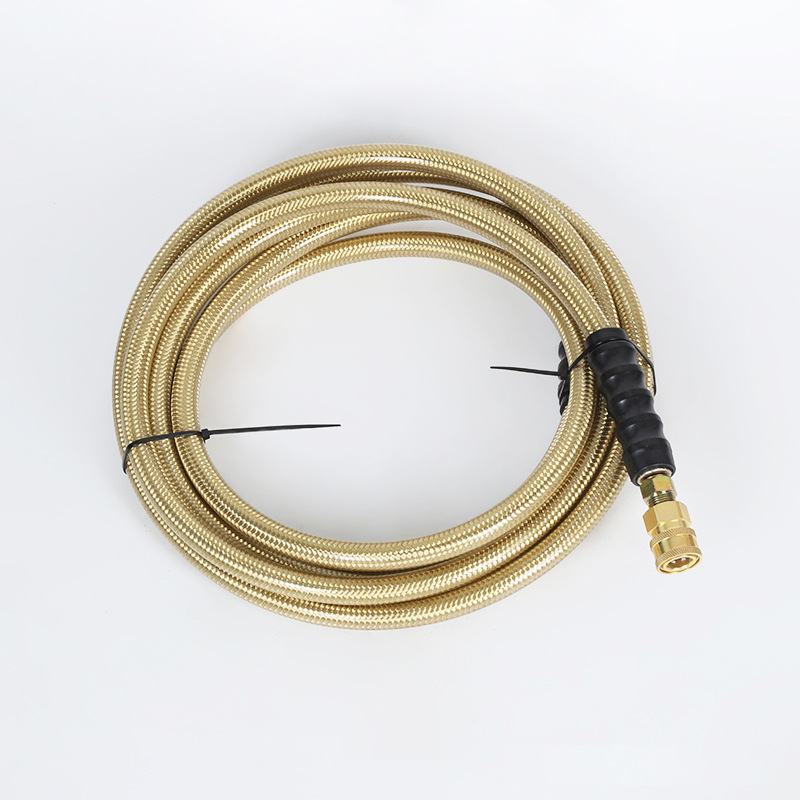
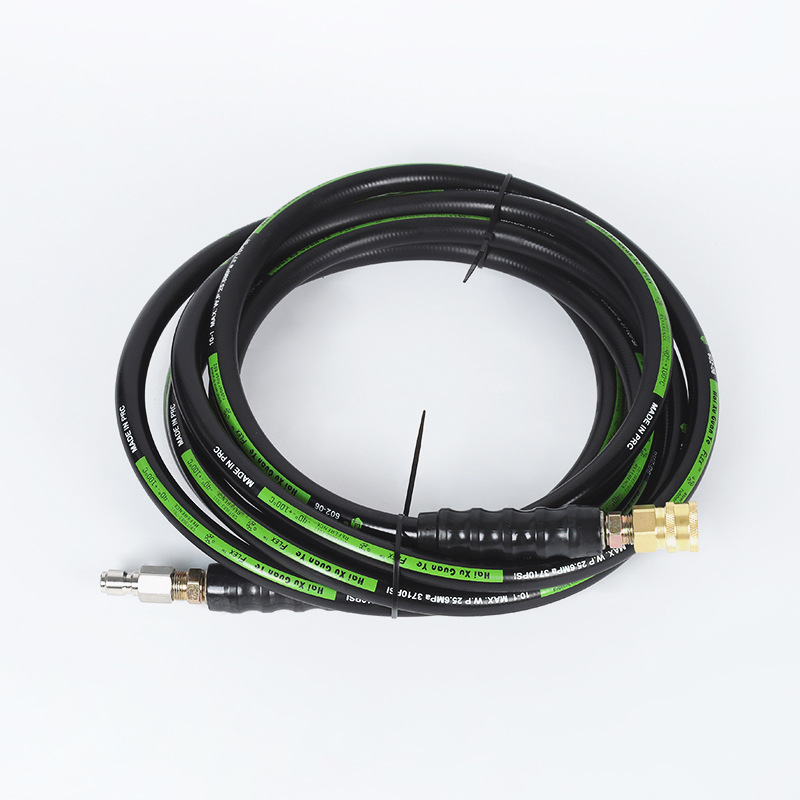
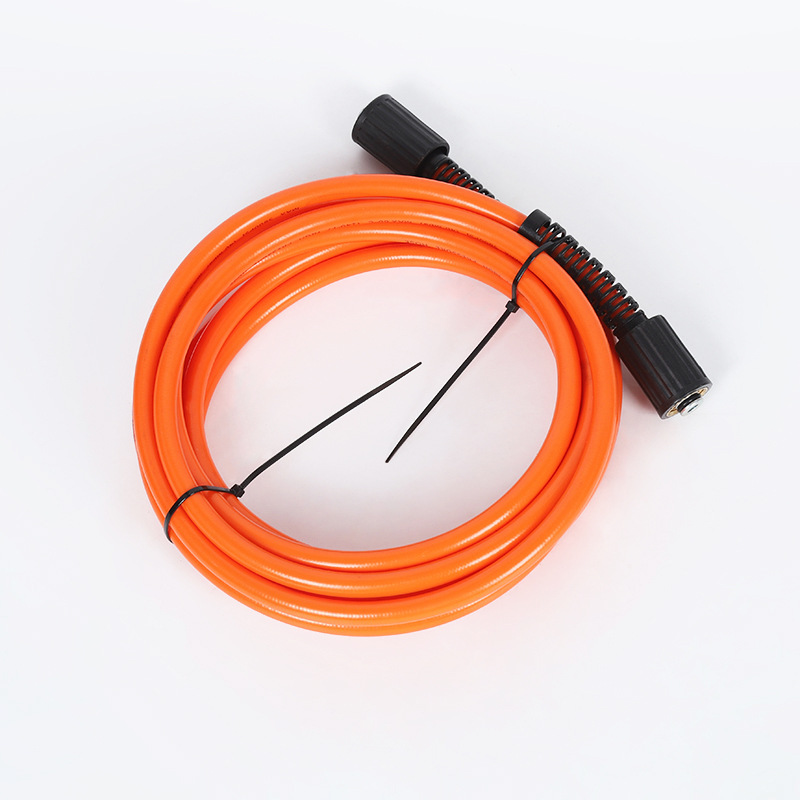
- Check the hose bore rating. A thin hose can starve a high-flow gun and reduce effective pressure at the nozzle.
- Prefer brass or stainless steel bodies and fittings for jobs above 150 bar; keep plastic for light domestic use.
- Order spare seals, O-rings, and at least one spare nozzle set with the gun so downtime does not wait on shipping.
A high pressure water gun is a system of interchangeable parts rather than a single disposable accessory. When pressure, flow, nozzle, and connection are matched to the task, maintenance becomes predictable and cleaning results become repeatable. Choose the gun for the work you actually do, not for the highest number printed on the handle.



 中文简体
中文简体