Rubber vs. PVC Pressure Washer Hoses: Which Delivers the Best Performance?
Rubber pressure washer hoses provide superior durability, flexibility, and high-pressure resistance, while PVC hoses are lightweight, cost-effective, and suitable for moderate cleaning tasks. Selecting the right hose ensures optimal performance, longevity, and safety in all pressure washing applications.
Material Properties and Construction
Rubber Hoses
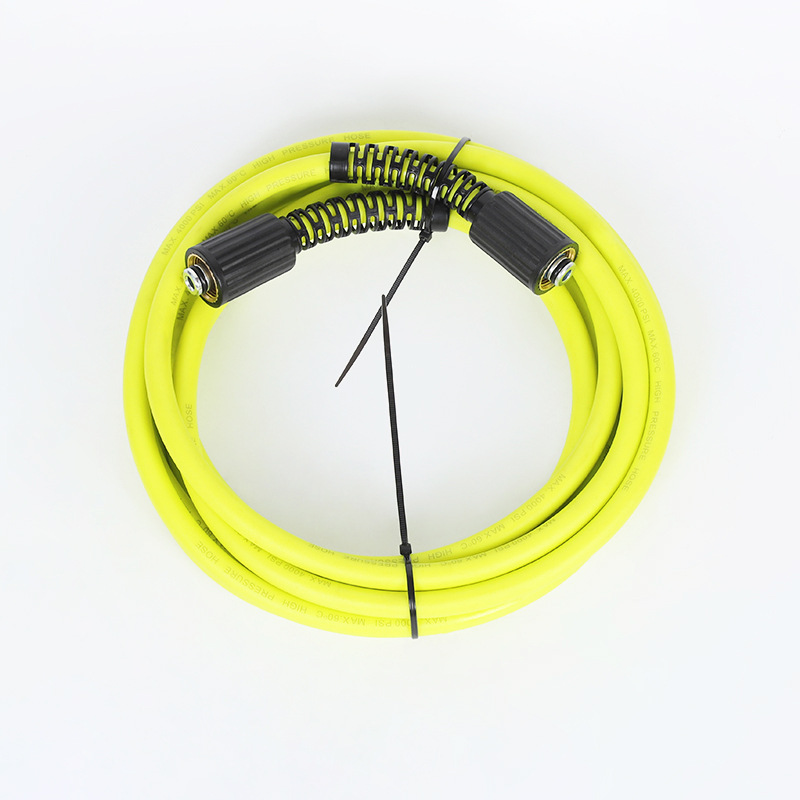
Rubber hoses are made of reinforced synthetic or natural rubber layers. Their construction allows them to withstand high pressures, resist kinking, and handle extreme temperatures from -40°C to 80°C. Heavy-duty braid reinforcements increase their burst pressure capacity, making them ideal for professional or industrial cleaning.
PVC Hoses
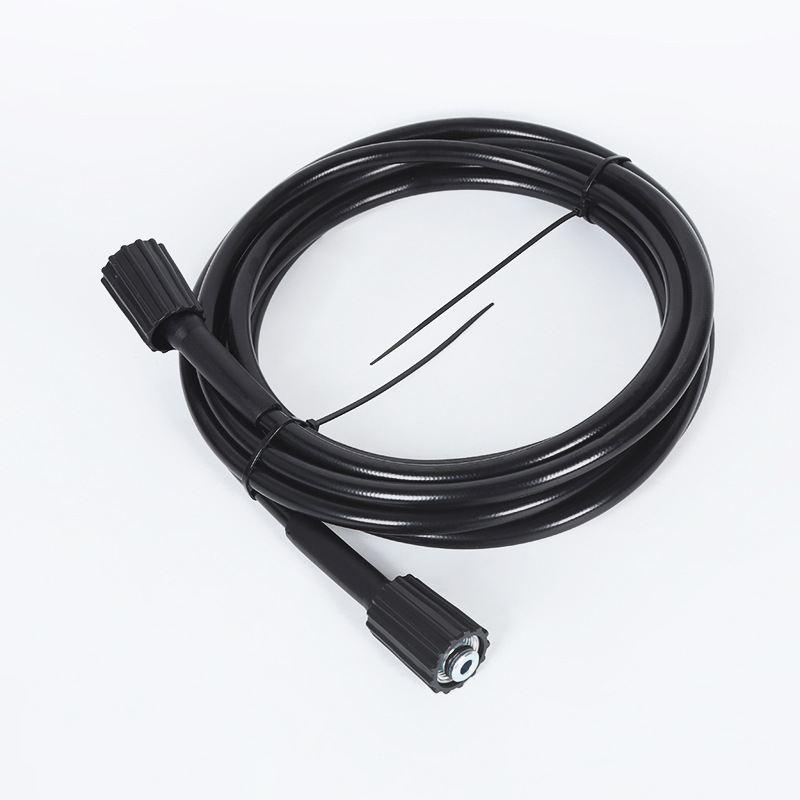
PVC hoses are lighter, made from polyvinyl chloride reinforced with textile fibers. While less flexible in cold weather, they are highly resistant to abrasion and corrosion. PVC hoses are more affordable, easy to store, and suitable for low-to-medium pressure applications, typically rated up to 2000 PSI.
Pressure Resistance and Performance
Rubber Hoses
Rubber hoses maintain high-pressure stability and can handle up to 4000 PSI for commercial-grade washers. Their elasticity absorbs pressure spikes, preventing sudden bursts and providing consistent water flow even at maximum pump output.
PVC Hoses
PVC hoses are limited in high-pressure performance, typically safe up to 2000–2500 PSI. Overpressurization or prolonged use at maximum rating can cause leaks or failure, making them more suitable for residential or light-duty applications.
Flexibility and Handling
Rubber Hoses
Rubber hoses offer excellent flexibility and memory, making them easy to maneuver around corners or vehicles without kinking. This reduces operator fatigue and improves efficiency, particularly during extended cleaning sessions.
PVC Hoses
PVC hoses are stiffer, especially in cold temperatures, which can make handling cumbersome. They tend to retain bends or loops, requiring careful storage to prevent cracking or permanent kinks.
Durability and Lifespan
Rubber Hoses
Rubber hoses are highly durable, resistant to abrasion, UV exposure, and chemical contact. Their lifespan typically exceeds 5–7 years under regular use, and heavy-duty versions can last over a decade in professional settings.
PVC Hoses
PVC hoses have moderate durability, vulnerable to cracking in cold climates and degradation from prolonged UV exposure. Expected lifespan is generally 2–4 years for residential use, requiring careful storage and handling.
Cost and Value Considerations
Rubber Hoses
Rubber hoses are more expensive, with costs typically 50–80% higher than PVC hoses. However, their durability, high-pressure capacity, and flexibility justify the investment for commercial or frequent use.
PVC Hoses
PVC hoses are budget-friendly, ideal for homeowners or occasional use. Their lower price point allows easy replacement, but long-term costs may increase if hoses degrade faster or fail under higher pressures.
Maintenance and Storage
Rubber Hoses
Rubber hoses require minimal maintenance; occasional inspection for wear or leaks is sufficient. They can be coiled or hung without affecting performance and resist damage from chemicals or UV exposure.
PVC Hoses
PVC hoses need careful storage, avoiding sharp bends, extreme cold, or direct sunlight. Periodic inspections are necessary to detect cracks or kinks that can compromise performance.
Performance Table: Rubber vs. PVC Pressure Washer Hoses
| Property |
Rubber Hose |
PVC Hose |
| Maximum Pressure |
Up to 4000 PSI |
Up to 2500 PSI |
| Flexibility |
Excellent, minimal kinking |
Moderate, stiff in cold |
| Durability |
5–7 years (heavy-duty 10+ years) |
2–4 years |
| Weight |
Heavier |
Lightweight |
| Cost |
Higher |
Lower |
| Ideal Application |
Professional, commercial, industrial cleaning |
Residential or light-duty cleaning |
Comparison of Rubber and PVC Pressure Washer Hose Properties



 中文简体
中文简体